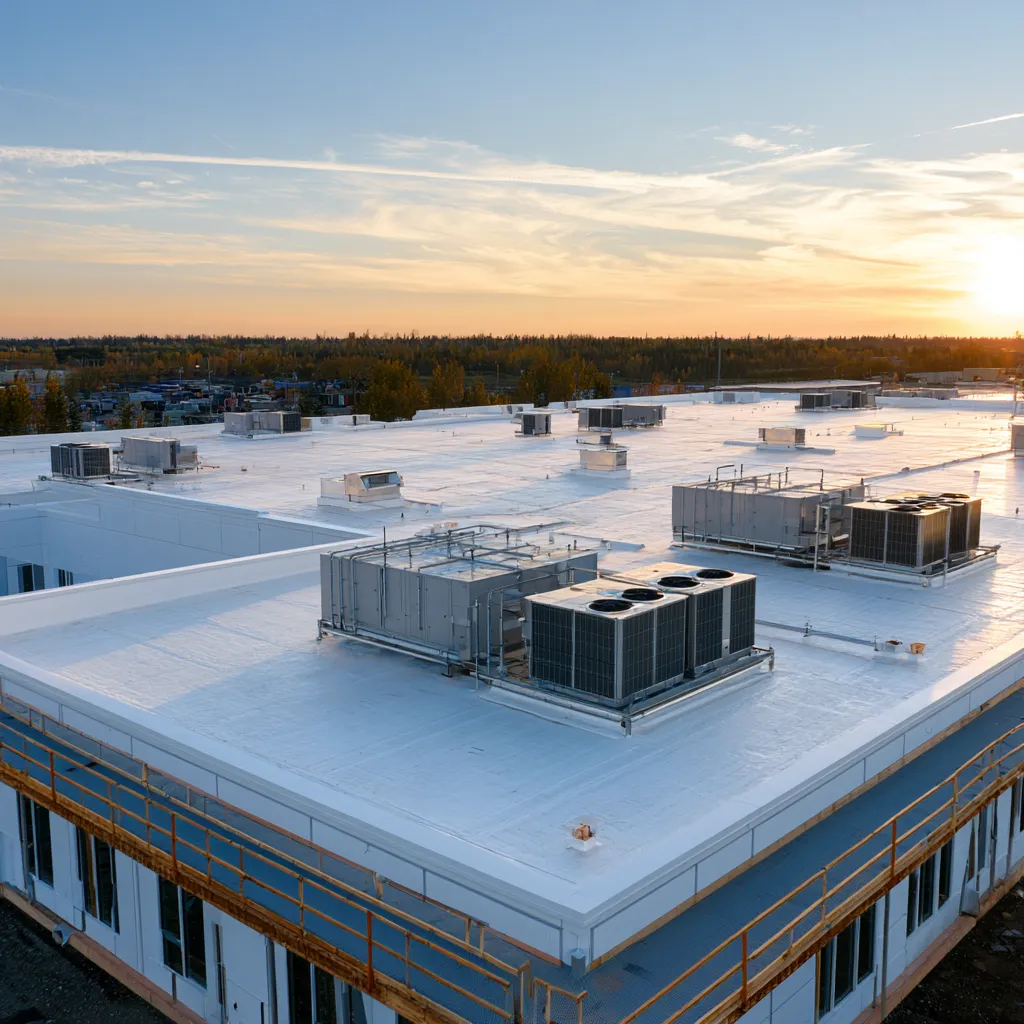
Commercial Roofing in The Colony, TX
Along the Dallas North Tollway, the Austin Ranch district's retail, offices, and apartments wear flat or low-slope roofs, not shingles. A local roofer grades the welded membrane and seams by hand before naming a price.
- A quote with no pressure to sign
- The work booked around your schedule
- A written call, not a sales pitch
Call (469) 234-3704
Read the building before you name the roof
The commercial roofs around The Colony are a mixed bag: strip retail and offices off the Dallas North Tollway, apartment blocks, and light-industrial buildings. They run flat and low-slope systems instead: welded single-ply sheets, layered asphalt, or a coating over what is already up there.
So the first move a local roofer makes is a read, not a quote. The deck, drains, seams, and the moisture under the membrane get checked and logged with dated photos, so the building's real condition is on paper before a system or a price is named. It starts with a documented free inspection.
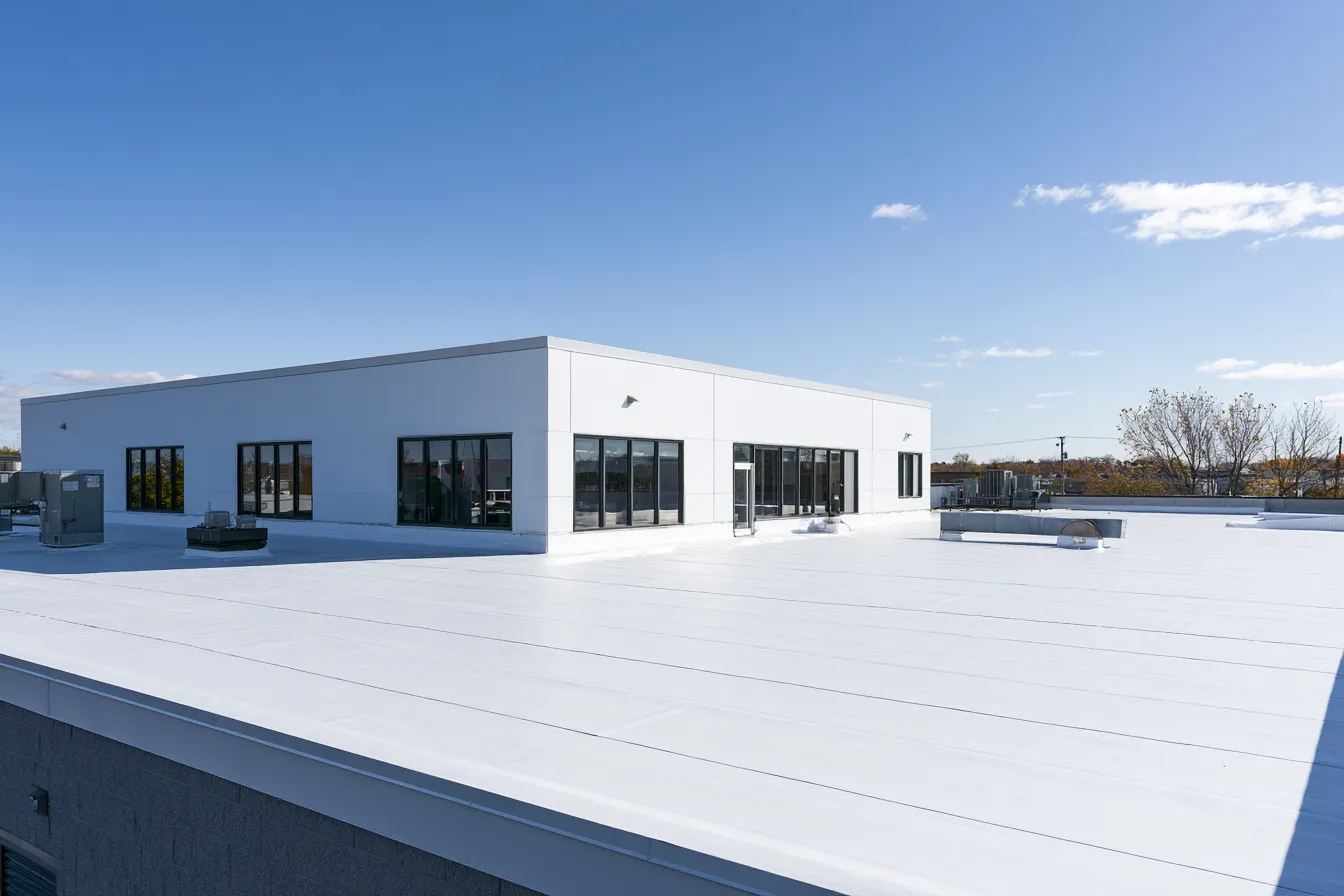
Which low-slope system belongs on your building?
The building decides this, not a brand. How the deck drains, how much foot traffic the membrane takes for rooftop units, whether kitchen or shop exhaust crosses it, and how long you plan to hold the place each point toward a different sheet. A local roofer names one only after the roof is read and documented. These are the low-slope systems installed and serviced on buildings around The Colony.
TPO
A thin thermoplastic sheet, hot-air welded at every seam, and the usual answer when a newer Austin Ranch storefront or office goes flat. Its pale surface throws back the summer sun, which can ease the load on the cooling units sitting right on top of it.
EPDM
A black synthetic-rubber membrane that wins on stamina over looks, running long and low-maintenance across wide, open decks. That profile suits warehouses and the older light-industrial buildings scattered along the tollway frontage.
PVC
Another welded sheet, set apart by what it shrugs off: grease, animal fats, and cooking oils that slowly eat other membranes. Restaurants and any building venting kitchen exhaust across the roof are where this membrane makes the most sense.
Modified bitumen
Asphalt built up in reinforced, layered plies, tough enough to take foot traffic and a slow-draining spot now and then. It tends to land on smaller roofs that get walked often to service rooftop equipment.
Built-up roof (BUR)
The original tar-and-gravel build, plies stacked into a heavy, redundant deck. It asks more labor than a membrane, but a long track record is why it still sits sound on plenty of the city's older commercial buildings.
Roof coatings
A silicone or acrylic layer sprayed or rolled over a roof that is tired but still sound underneath, adding a reflective skin and years of life for a slice of a tear-off. The roof has to test dry first, or the coating only traps the water.
Not sure which of these is overhead, or what a hard hail season on open lake exposure has quietly done to it? That is the read: the roofer names the system, grades the life left in it, and dates any storm damage before you weigh a repair against a re-roof. What each path tends to run is broken down on the roofing cost page.
Repair, restore, or replace, and the honest read between them
Most commercial work here lands in one of four places. A local roofer scopes the building into the right one and says which, in writing, before a crew is booked.
- 01Targeted flat-roof repair
- The failure handled on its own, not the whole roof torn off: a seam pulling open, a drain that ponds, worn parapet flashing, or the collar leaking at an HVAC curb, each traced and matched to whatever membrane is already up top.
- 02Coating restoration, when it qualifies
- On a roof that tests dry and sound, a fluid-applied silicone or acrylic coat renews the surface and buys real years for a fraction of a tear-off. Over wet insulation it does the reverse, so a moisture test always comes before the quote.
- 03Full re-roof or new membrane
- A complete low-slope system, single-ply, modified bitumen, or built-up, sized and fastened to the deck for the wind this open ground catches, once a roof is genuinely spent and no repair is worth carrying.
- 04The restore-or-replace read
- Rooftop traffic, moisture trapped in the insulation, the state of the deck, and how long you will hold the building settle whether a coating is the smarter fix or a tear-off is the right move. The roofer tests before recommending, never after.
Storm damage on a flat roof runs the same track it does on a house; it just hides better, since a bruised membrane or a split seam shows nothing from the lot below. A roofer records and dates it on the same visit, then tells you in plain terms whether it is worth putting on a claim.
From moisture test to signed scope, in that order
Read first, priced only once it is in writing, and staged so tenants and customers keep moving.
The read, on paper
A local roofer opens with a moisture check on the insulation, then works the drains, the seams, the parapet flashing, and every rooftop collar, and comes back with dated photos beside one written figure. Neither the plan nor the price moves until both sit in front of you.
The call, in plain terms
Coat it, patch it, or replace it: the sound option gets laid out with the reasons under it, and the figure is locked before a crew is scheduled. Which way the building goes is yours to choose, not ours to push.
The build, then a closing check
A crew installs the membrane or completes the repair to the written scope, and the seams, flashings, and drains get a final pass. The workmanship terms go in writing for the file, and any manufacturer coverage follows the full system that went down.
What owners ask before a flat roof goes on file
Clear answers on systems, storms, disruption, and coverage for the people who own the building.
Q1How does a roofer land on one membrane over another for my building?
Q2How long should a new low-slope roof last before I am back in this conversation?
Q3Hail hit hard last season. Can a flat roof be damaged without it showing from the ground?
Q4If a storm did total the membrane, does a commercial claim work like a house claim?
Q5Do the crews need my building empty, or can we stay open through it?
Q6What warranty comes with a commercial roof, and is any of it yours?
Scope your commercial roof before you budget for it
A flat roof keeps its wear where the parking lot cannot see it, so the honest first step is a read on paper, not a quote. That read is what The Colony Roofing Experts sets up: a local roofer runs the moisture test, grades every seam, flashing, and drain, and prices repair, restoration, or a full re-roof into one written figure. Nothing is owed for it, and nothing begins until you say go.