
Gutter Repair & Installation in The Colony, TX
On Lewisville Lake, a cloudburst drops more water in ten minutes than an undersized trough can move, and it sheets over the wall. A local roofer sizes seamless troughs to move it off the house.
- A quote with no pressure to sign
- The work booked around your schedule
- A written call, not a sales pitch
Call (469) 234-3704
The problem here is volume, not just debris
On the open water at Lewisville Lake nothing breaks a squall, so the rain lands wind-driven and in bulk. The mature canopy over Original Town and Eastvale adds a second failure, packing a trough with leaves and seed.
Forming the trough in one piece at the curb, sizing each length to its load, and fixing it to sound fascia answers both volume and debris. A run built that way carries a lakeside downpour past the wall and clear of the foundation, shielding the home no less than the roof replacement above it.
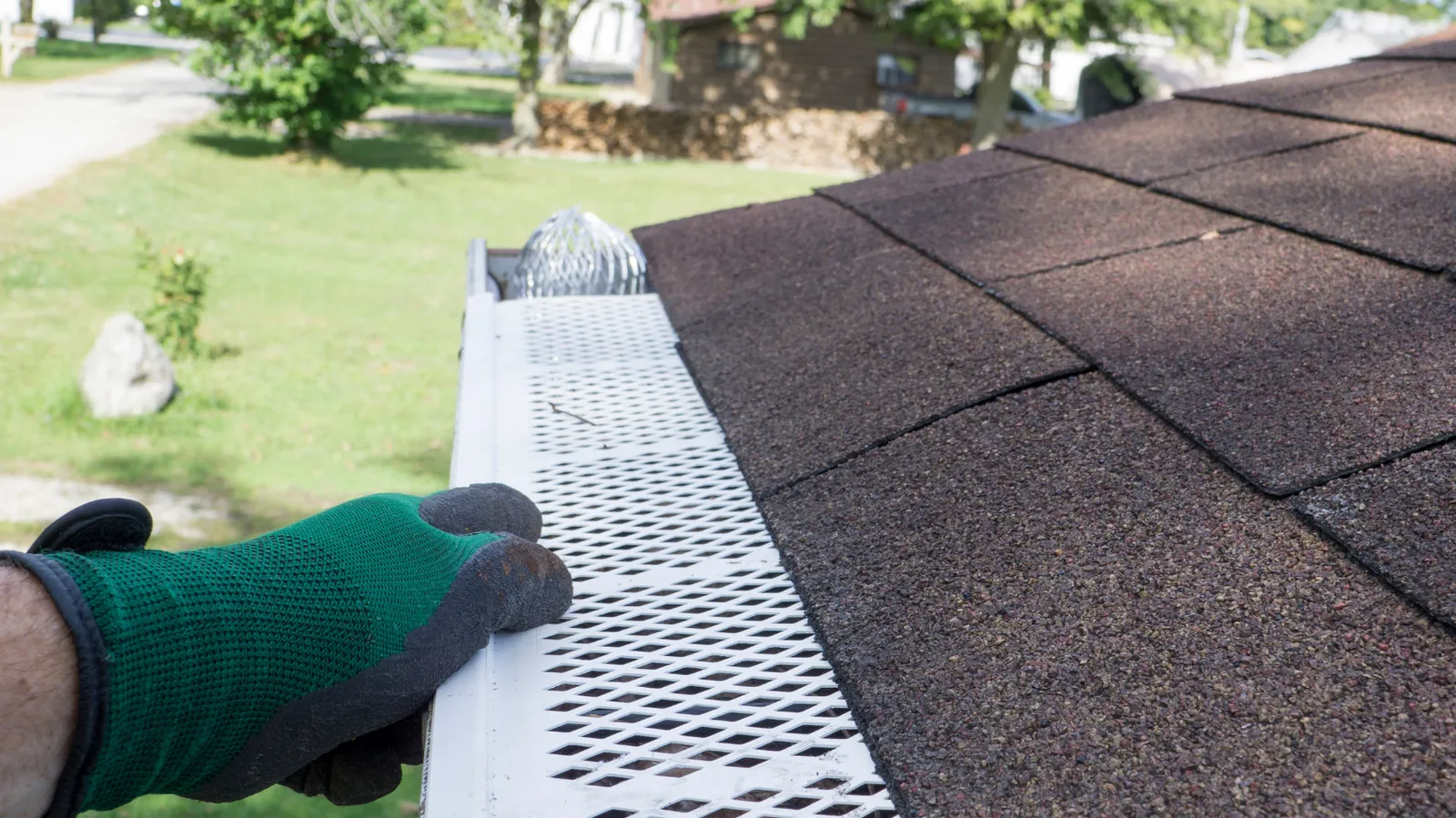
What goes into a run that keeps up
The pieces a roofer sets so a hard rain gets off the roof without touching the wall.
- 01Formed in one continuous piece on site
- Rolling the trough as one piece at the truck leaves no mid-run joint to work loose and weep a season later. On the wind-exposed lake elevations, stepping up to .032 aluminum is the call worth making by name, since a thicker wall dimples under hail rather than creasing.
- 02Sized at five-inch, or six when volume calls
- Most homes run fine on five-inch. A roof that is large, steeply pitched, or chopped up out on the peninsula tends to call for six-inch troughs and fatter downspouts, because an open-water squall overruns a narrow channel however spotless it happens to be.
- 03Runoff carried well past the wall
- Extensions on the downspouts push the water out past the footing, because once a puddle stands against the slab a simple drainage fault has begun turning into a foundation one.
- 04Leaf guards where the trees justify them
- Along the shaded older streets, guards drop how often a run chokes, but they cut the cleaning down instead of ending it; a roofer will tell you straight whether they earn back their cost over your particular trees.
Where the fascia under a sagging line has turned soft, the board gets fixed first and only then does fresh gutter go up, which loops in roof repair.
How the job runs, measure to drain
Size it to the water, form or patch the run, then send it past the slab.
Measured for the worst rain, not the average
Reading the roofline first, a roofer works out the load each stretch must shed when a lake squall opens up, then specs trough and downspout sizes to carry it. Those numbers land on paper before anyone starts.
Mended in place, or run new at the curb
A minor fault means the bad section alone gets cut out and mended; a full replacement means a one-piece trough formed right there and fastened to fascia the roofer has checked as solid, so it stays put in a cloudburst rather than peeling off the board.
Routed clear of the footing and shot for the file
Downspouts get aimed so the runoff lands well beyond the footing, and a photo of the finished edge goes in your file, letting you see for yourself how water leaves the roof.
What a failing run looks like
A short check on whether yours is still holding up.
- Water spilling off the front edge mid-storm before it ever reaches a downspout
- Dimpled aluminum and dented gutter tops after a hail day out front
- A trough packed solid with grit and fallen debris under the shade streets
- A fascia board behind the run gone soft, with rot creeping into the roof edge
- A rusty stain bleeding down the soffit under a run that keeps backing up
Spot any one of them and a documented inspection is worth booking; a run that has given up tends to be telling you something about the eave and the board it hangs on.
What open water, hard rain, and old trees do to gutters
That storm record counts Denton County downpours alongside the hail, and it is the cloudbursts that test a gutter: a channel fine for a soft rain goes over its lip the second a squall rolls off Lewisville Lake.
In the older neighborhoods, along Original Town and Eastvale, the tree canopy sheds leaves and seed that load a run between cleanings. A roofer treats the trough, the fascia, and the eave as a single working assembly.
- 01Built for a squall, not a sprinkle
- One open-water downpour can overrun a narrow trough in minutes, so each length is sized against the roof above.
- 02The board the whole run rides on
- When a line droops, the fascia behind it is usually the culprit, so that board gets fixed first.
Runoff cresting the front lip, or a line starting to droop when the weather hits? One free documented visit takes in the entire roof edge at once.
What owners ask before a gutter job
The things people here raise first.
Q1Repair, or replace the whole run?
Q2Five-inch gutters, or step up to six?
Q3Do leaf guards mean the end of cleaning them out?
Q4Can a downpour top gutters that look perfectly fine?
Q5Does a hailstorm damage the gutters as well?
Q6Is it worth putting new gutters on with a new roof?
Stop the overflow before the next storm
Overflow at the lip in every storm, or a gutter run pulling off the board? A roofer walks the roofline, works out a one-piece trough sized to what it truly sheds, and hands you a single figure covering either a patch or a full swap. No pressure.