
Storm & Hail Damage in The Colony, TX
Denton County's storm log reads like a case file: 33 hail days, a 5.90-inch stone, 96 mph winds. Hail that size hides high on the slopes, so a local roofer documents it before any claim.
- A quote with no pressure to sign
- The work booked around your schedule
- A written call, not a sales pitch
Call (469) 234-3704
The lake gives wind and hail a clean run at the roof
The Colony sits on a peninsula in Lewisville Lake, where open water changes the math. The 96 mph gusts in the county record are what these lakeside slopes face.
A late-2000s Tribute roof and a 1980s roof in Original Town can both take a real hit from a stone that size, older, more brittle shingles usually bruise easier, but on either roof the damage shows in the mat, then hides for a season. So a roofer gets onto every slope, dates each photo, and matches the hits to a storm in the Denton County log before the insurer. Filing stays your call: the claim process and a documented inspection begin it.
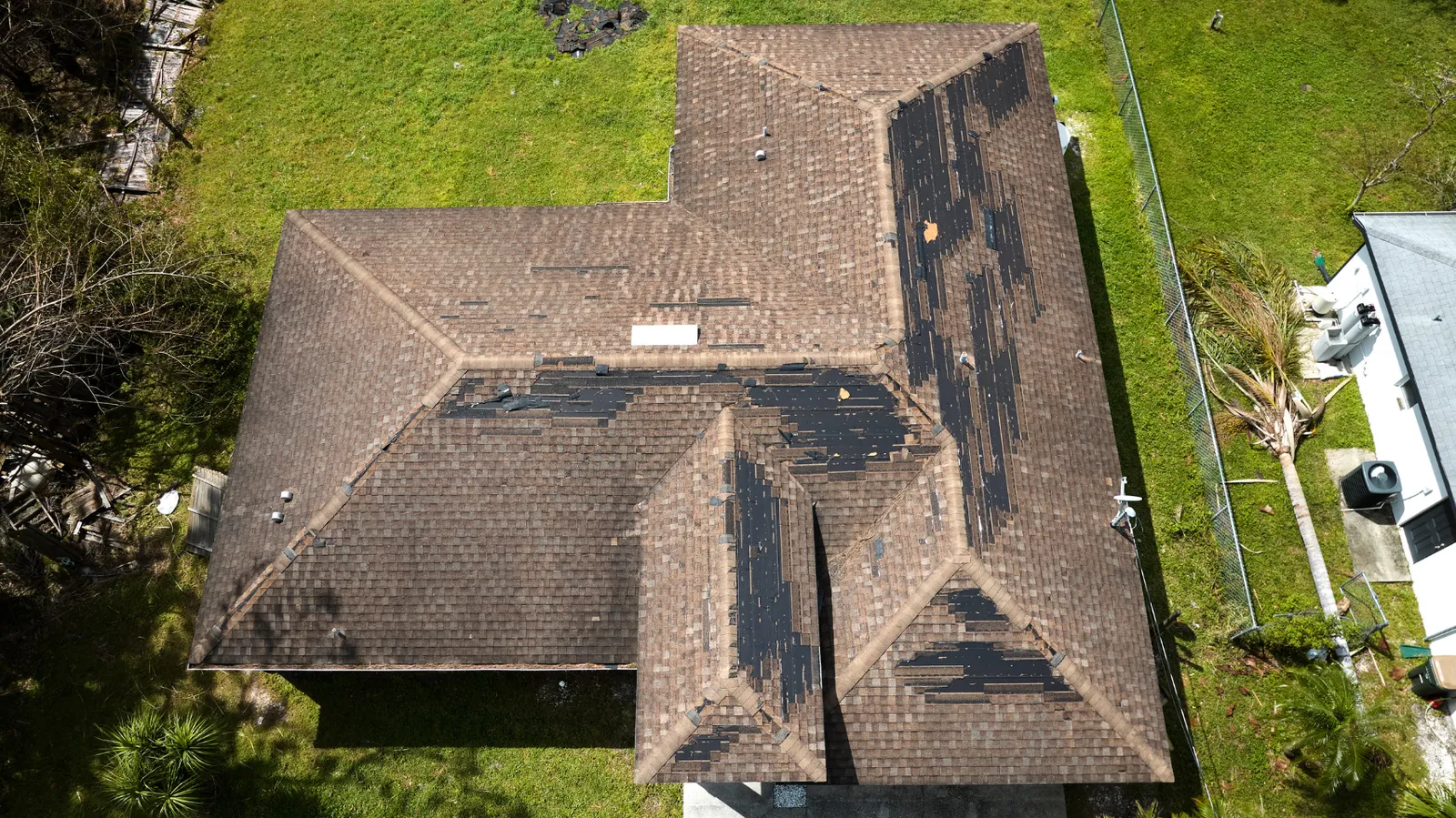
Storm loss on one side, wear on the other
An adjuster is really doing one thing: deciding whether a specific storm caused the damage or time did. These are the items that land on each side of that call, named plainly so you know where your roof stands before anything is filed.
One storm, on a date you can name
Damage a single hail or wind event caused, on a day the county log can confirm, is precisely the loss a policy exists to cover.
- Wind-lifted and creased shingles. Tabs unsealed, folded, or torn off, the mark 96 mph lake-driven gusts leave behind.
- Hail-bruised mat and lost granules. Spongy, dark spots where a stone crushed the mat and swept away the granule layer that guards it.
- Dented flashing, vents, and pipe boots. Cracked boots and knocked-in metal that start passing water at the joints.
- Water stains inside the house. Ceiling rings and damp attic insulation usually ride on the same claim.
A roof that gave out on its own
Wear, age, and slow leaks left to spread are the roof’s own clock running out, and that is a replacement bill, not a storm claim.
- Roofs that aged out. An original late-1970s roof in Original Town can reach the end of its life on its own, and that is a replacement, not a storm claim.
- Slow leaks nobody caught. Water that worked in gradually across several seasons rather than in one storm you can date.
- A past installer’s shortcuts. Bad workmanship belongs to whoever did it, never to your carrier.
- Dents that only look bad. Some policies exclude cosmetic marks on metal that never actually let water in.
Four years of Denton County hail, on the record
The Colony sits in Denton County, squarely inside North Texas hail country, and the four-year NOAA record is blunt about it: 33 separate hail days, 168 reported stones with 139 of them an inch or larger, gusts to 96 mph, and a peak stone of 5.90 inches, bigger than a grapefruit, that fell near Sanger on June 15, 2023. Bartonville logged 4.25-inch hail four days earlier. A date of loss that squares with a stone that size is hard for anyone to wave off. The rows below come straight from the NOAA and NCEI Storm Events record for Denton County, not from us.
Source: NOAA / NCEI Storm Events Database, Denton County 2023–2026, on the record. The table above holds the most recent entries on record. Updated July 2026. Figures pulled straight from the NOAA / NCEI Storm Events Database for Denton County, on the current record.
The four pieces of a storm file
A documented inspection is not a walk-around; it produces an actual file, and every file is built the same way so nothing about the roof rests on memory. The four pieces below are what a finished inspection yields. Yours is assembled from your own roof, on your own timeline.



The files pictured are illustrative, an example of what a documented inspection produces. Yours is built from your own roof, at your own inspection, on your own schedule.
Check for these once the storm clears
None of this needs a ladder. From the ground and the gutters, these are the tells that a stone or a gust actually reached the roof, worth a scan even when everything looks intact.
- Gutters overflowing or dropping off the fascia after a hard storm off the lake
- Bare, shiny, or pockmarked patches on the shingles where the mat shows through
- Granules piled in the downspout splash blocks and gutter elbows after a hard hail
- A vent pipe collar gone brittle and chalky, cracked enough to spot from the driveway
- Shingle tabs bent, curled, or lifted along the seal line after a windy day
Almost none of this shows the real story from the yard, which is why a dated look pays for itself after any serious hail day, and a small hit found early is often a targeted repair rather than a whole new roof. If water is already getting in, get photos, then get it covered; carriers treat temporary protection as required and reimbursable.
What The Colony homeowners ask after a storm
Common questions once the hail has passed and the roof needs a real answer.
Q1Will insurance cover a 20-year-old roof in The Colony?
Q2How big does hail have to be to hurt a roof here?
Q3Does living on Lewisville Lake change my storm risk?
Q4What exactly is a date of loss, and why does it matter so much?
Q5Will a local roofer handle the insurance company for me?
Q6How soon after a storm should I get the roof looked at?
Start the file before the next season hides the damage
A hail hit you can date is worth more than one you only remember. Reach The Colony Roofing Experts and a local roofer gets onto every slope, times the photos to the Denton County record, and talks you honestly through whether a claim is even there, all before a word goes to your insurer. If the roof does not warrant one, you will hear that too.